Tuesday, August 5, 2014

Berlin Lacht! and so do we!


And Berlin Lacht smiles... so beautifully!
Thank you all!


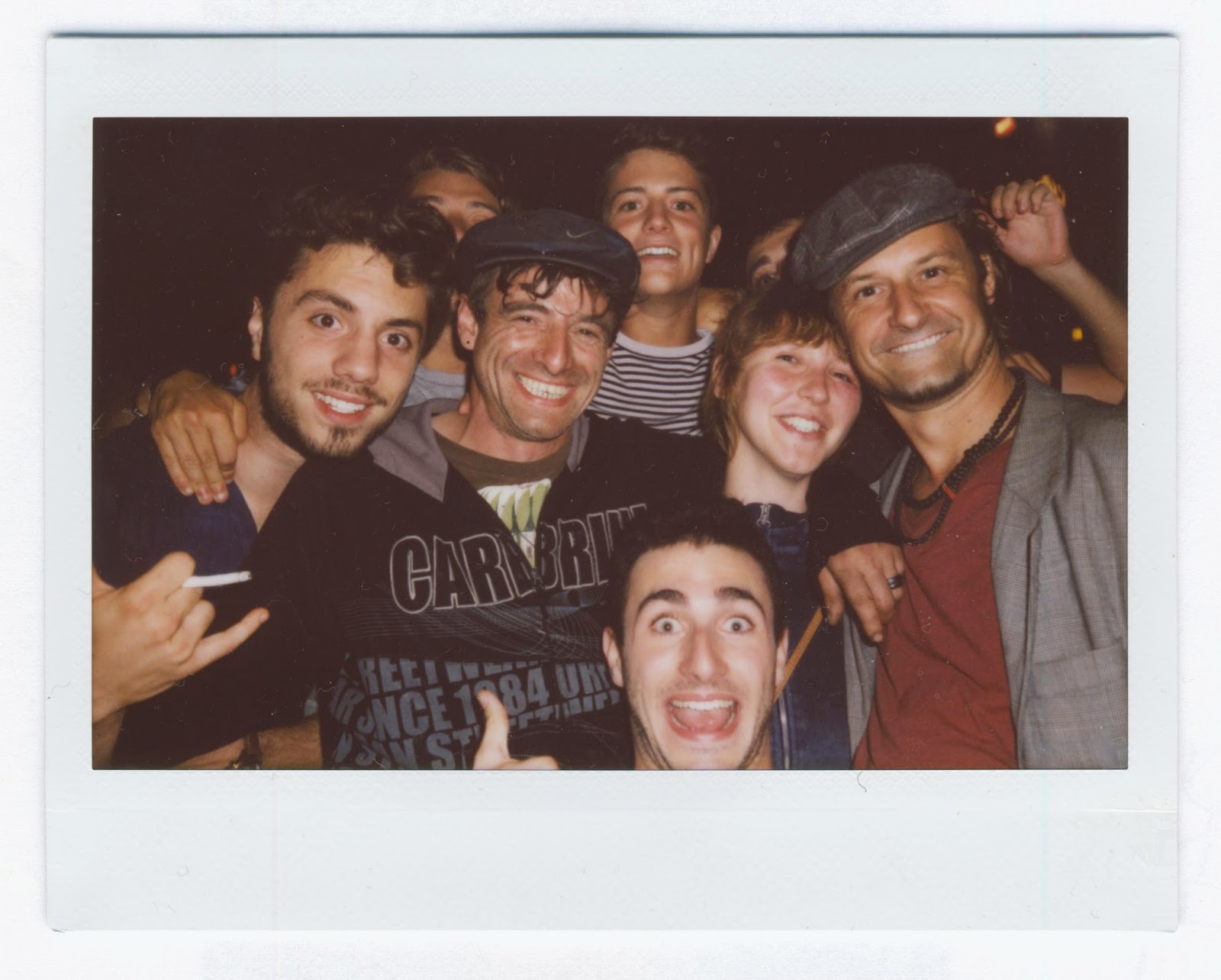
Last August I started taking pictures at Berlin Lacht 2013 - the International Street Theatre Festival in Alexanderplatz.
http://muntenescu.blogspot.de/p/berlin-lacht-international-street.html

Where half a million people demonstrated for freedom and democracy in November 1989 there are now artists and musicians, crowds of clapping spectators, tents and stages, a world of magic, playfulness, creativity and freedom.

The photos are bacsktage moments reflecting the inner beauty of the artists and the radiance of their creativity. An attempt to prolong their presence, to catch a strong character, to ravel in their mystery, to celebrate their joy and craziness!
Moments of coming together during parties and portraits taken shortly after they finished a performance.
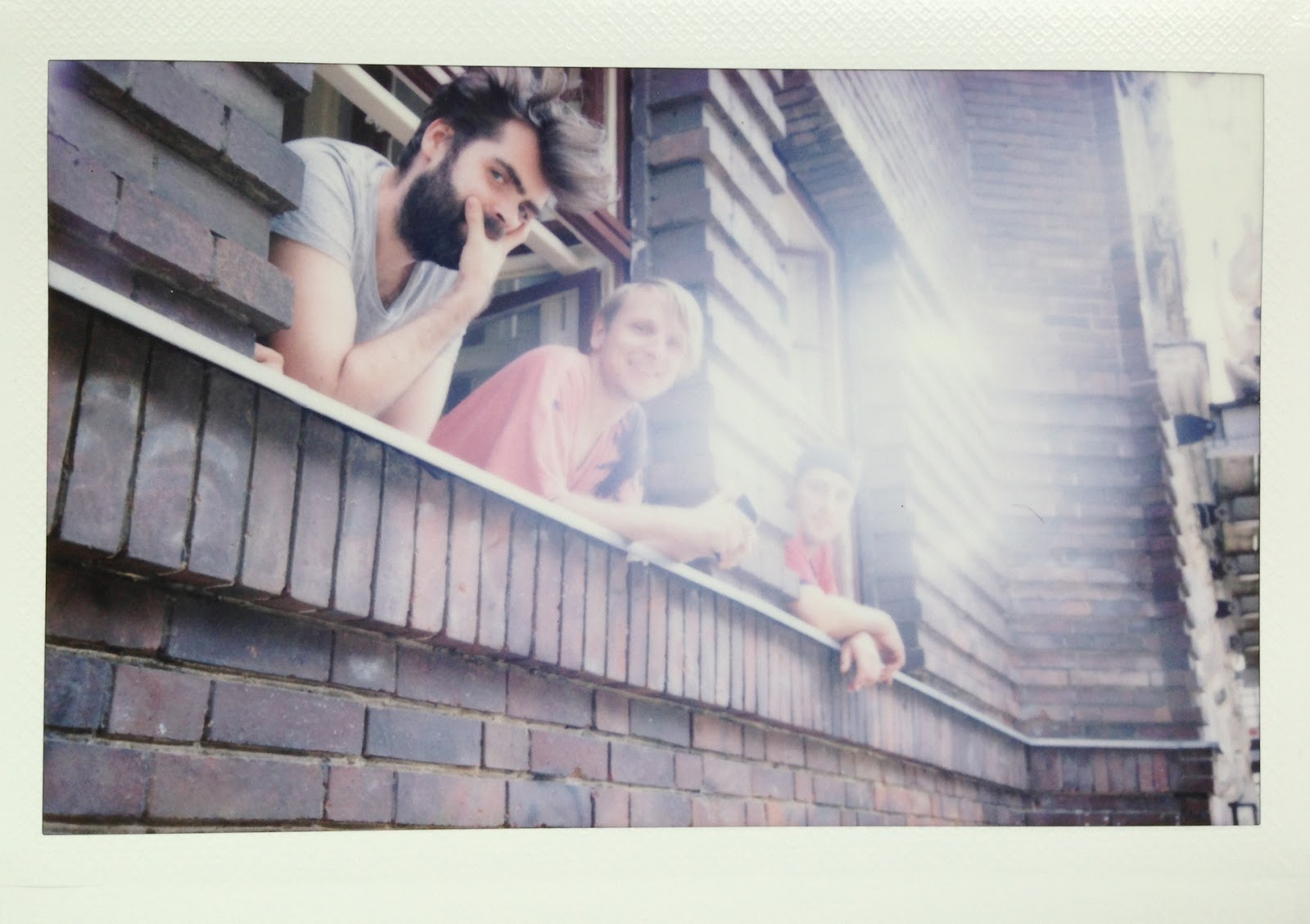
This year´s instant pictures fit even better the world of spectacle and magic: direct, spontaneous, full of surprise, ephemeral, unique!


Monday, November 18, 2013

Tuesday, October 1, 2013

Up the walls again!

Vernissage: Friday, the 4th of October 2013, starting 7 PM
Exhibition: 5 October - 25 october 2013
Caffe degli Artisti, Fidicinstr. 44

Artists: Ioana Muntenescu (RO) & Daniel Lamas (DE/PE)
Curator: Claudia Lamas Cornejo
Management: Julia Goth


Thursday, September 12, 2013

Wednesday, September 11, 2013

Not a self-portrait!


Thanks, photographer!


Enjoying the other side of the camera
Wrangelstr., July 2013


Portraits in the Wrangelstr.


On a sunny day: Joscha, July 2013


July Instants: The Bunker


Sunny morning, July 2013


The entrance, July 2013

Instant pictures in August


In the hood... Wrangelhood!


At Baretto, Wrangelstr.


Visible, invisible, present... 

Frieda Gabriella with Nora&Lars

Saturday, August 10, 2013

II II // I


Nothings (and Somethings) by Christian Burnoski
1st-14th August, 2013
with opening performance To Be It by Andrea Jenni
with Martina Cesari & MariaGiulia Serontoni


A black bowler hat decorated with white buttons hiding a tennis ball... A white wall framed by two perpendicular paintings, mainly orange, except for a spot of white, where they meet the wall. Red stripes of the American flag in a round frame and some missing stars, like the title overtly states (Stripes without Stars, 2013). What you don't see and exactly what you see lie in front of your eyes... Playful and conceptual in the same time, Christian Burnoski's show in the attic of Hochstr. 45 involves seeing, imagining, making-believe, believing.

Tennis Ball Under Hat with White Buttons (2013) draws its inspiration from a scene in Michelangelo Antonioni's Blow-Up (1966), in which the camera follows an imaginary tennis ball... The presence of the ball in Christian Burnoski's piece is a creation of both the artist's and the viewer's powers of imagination. Due to their round shape, the holes (like little nothings) in the canvases making up Vine St. (2012) dialogue with the buttons from the near-by magic hat. Playfulness is at the heart of this piece, too: the title refers to the artist's address as a child and the holes nostalgically encapsulate his “childhood phone number growing up” . 


Vine St. 2012
holes cut in canvases, acrylic

Some of the installations incorporate architectural elements of the exhibition space itself: White Wall between Two Paintings mentioned before and Echoes II, in which the window is being doubled by paralleled pieces of glass hanging on rope.


Echoes II, 2013
glass, rope, metal clasps, window

According to the artist's own confession, Between Two Infinite Voids (2013) encapsulates his view of life as a thin time span between two infinities (past and future), which makes it “the most existentialist piece in the exhibition”. When human life is a short, almost unsubstantial and invisible thing caught between before and after, the attempt to make it visible and to make it real resembles magic.

Andrea Jenni's performance TO BE IT brings different rhythms in the exhibition space. Alternating movement and stillness, dance and gesture, it echoes Burnoski's play with juxtapositions, repetitions, reflections. The opening of the performance installs a feeling of levitation and slowness. Hit against the wall, two black latex balloons return to the performers in a calm movement, almost floating. At the end of the performance they will become exhibited objects and keep still in a corner, between two wooden bearers (Inflatables in Space, 2013). 


Inflatables in Space, 2013
latex balloons

During the second part of the performance the two dancers, each of them in a different spot of the exhibition place, perform slow motion movements in connection with the black balloon. The last part involves dancing between Echoes I and Echoes II (2013). The dancers' movements are more rhythmical, they mirror and counterpoint each other, just like the neighbouring art pieces.


Christian Burnoski's exhibition and Andrea Jenni's accompanying performance engage in a dialogue with the space and with each other. Out of their collaboration the void and the Nothings became images of life and invitations to play. Something worth seeing and sharing...


Exhibition views and performance stills: ©Ioana Muntenescu
II II // I   Hochstraße 45, 13357 Berlin, www.hochstr45.com


Friday, June 28, 2013

Wonderlust during the 48-Stunden Neukölln Festival... and after!


The exhibition lasts until the end of June.
Opening hours: daily, from 6 PM... until the bartender decides to go home.
Many thanks to Frank and the Froschkönig: http://www.froschkoenig-berlin.de/

Wednesday, May 29, 2013

Mircea Cantor (b. 1977, Romania). Short notes on a personal discovery


I discovered Mircea Cantor by chance, leafing through a French art magazine. And I immediately liked his works. In the beginning it was the UNPREDICTEBLE FUTURE: the handwriting on a steamy, wet window. I think each of us has, at least once in his life, put his finger on a dusty car or a steamy window, wrote something and left there a short message. A message addressed to everybody, to who ever happens to pass by and spot it.

In Mircea Cantor's work the letters leave their traces as they start to melt, before they will disappear. Letters: evanescent, living traces...
The spelling mistake is charming and it made me think of a child having written this on his way to school, home, to the playing ground, ... through life.
A short poem on fragility, evanescence, surprise, hope and the imagination.


The artist is renown for his film entitled Deeparture, in which a wolf and a deer were brought in a white, empty gallery and left to watch each other, make each other nervous and unsettle our own senses and expectancy. The tension surfaces from challenging the instincts, from the crude beauty of bringing together two creatures which in a different environment (their natural one) are destined to play the roles of pray and hunter. The viewer of this film witnesses the exchange of glances between the wolf and the deer, their breathing, restlessness and calm.

This is a simple, almost minimalist film. Bringing together the two animals is a challenge Mircea Cantor addresses to death and survival instincts (both violent and fully natural) and it is also an invocation of the unexpected. Things no longer happen according to a preconceived scenario.

When I read in his CV that he lives ”on Earth” I remembered another work, also made in a minimalist manner, namely by adding a single letter: the French title Le Monde becomes for Mircea Cantor Les Mondes. The critics read in this an anti-globalisation message; I rather see it as a small manifesto of freedom, an apparently simple game, with letters and a marker: the artist-child and the artist-protester play with the world, correct it, complete it. The artist’s toy, the world, becomes a multitude of toys (les mondes). There is a Dadaist feeling in his work, drawing back to the Romanian inception of modern art. 

In a video entitled The Landscape is Changing a group of protesters carry mirrors instead of banners with slogans. In their mirrors you see how the environment changes while the people themselves walk and change their position. As the artist himself confesses, he is interested not in a global discourse, but rather in a universal one. The protest takes places in an unknown city, no words are written anywhere, there are only people and the world they transform. The image (the reflection in the mirror, the video itself) mediates between us and the world.

Although The Title is the Last Thing, (Philadelphia Museum of Art, 2006), I confess I like Mircea Cantor’s titles: Changing Sky (Ciel Variable, Frac, Champagne-Ardenne, Reims, 2007), Born to be Burnt (GAMeC, Bergamo, 2006). Works such as The Second Step and Double-Heads Matches raise my good spirits: a double-headed match is a sign that the world keeps on being reinvented.

The second step: is it Armstrong’s second step on the moon, taken out of anonymity by the artist or does it belong to another lunatic astronaut? In both cases, it is a fresh, cheerful and optimist imprint upon the open world we live in.

I like Mircea Cantor’s humour: regarding the for or against discourse on globalisation, he brings in a mischievous smile: ”I hear a lot of this official, left-winged discourse about the periphery. Berlin, Los Angeles... I myself came to live in Paris in order to be at the periphery of Romania. It’s my manner of keeping a distance from everything. (”J'entends beaucoup ce discours officiel, de gauche, sur les peripheries. Berlin, Los Angeles... Moi-meme, je suis venu habiter a Paris pour vivre a la peripherie de la Roumanie. C'est ma maniere d'avoir une distance avec tout”, Beaux Arts, No.275, May 2007). The artistic credo of a man living in exile, but ”on Earth”.